A Working AC’s Gear Guide
by David “clean” Berryman, 2nd AC
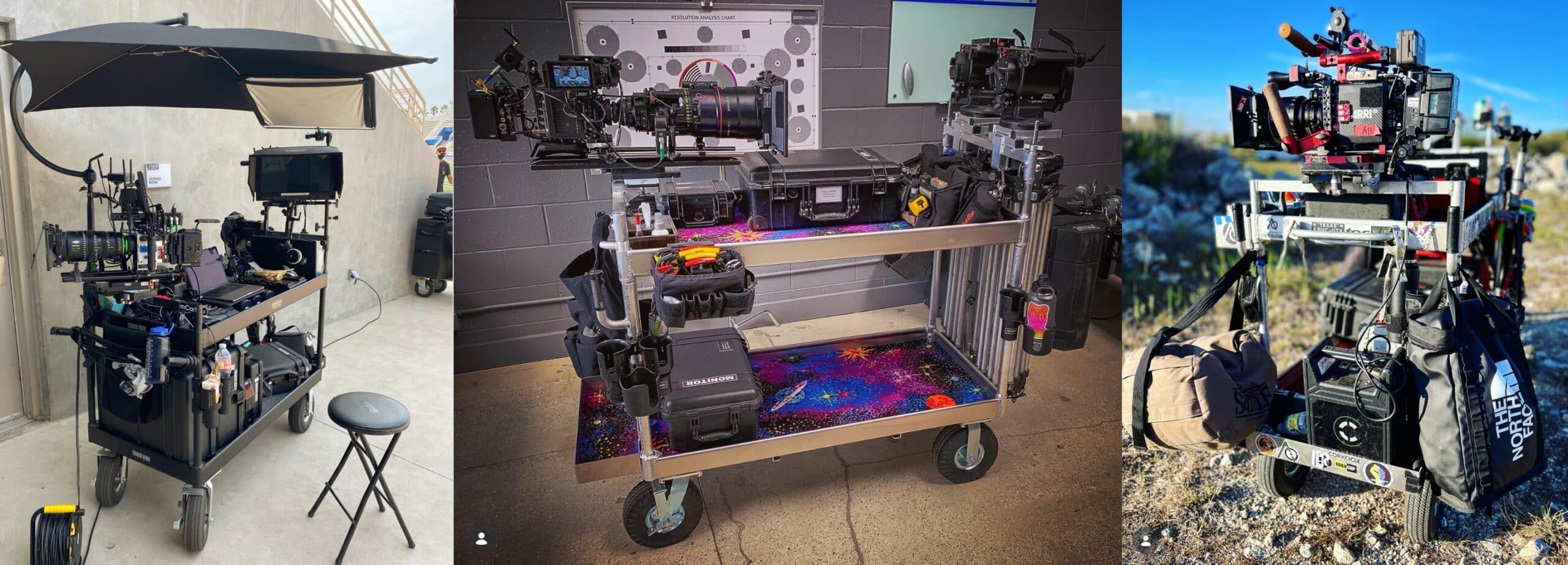
The Camera Cart. If you’re a camera assistant getting serious about your kit, at some point the question stops being “do I need a cart?” and starts being “how do I build one that actually works?”
There’s no shortage of opinions on this. Everyone’s cart is different, and it should be, your cart reflects how you work, what shows you do, and what gear you’ve decided is worth spending money on. But after years of working as an AC and building the accessories that end up on those carts, I’ve got some strong opinions about what actually matters and what’s just noise.
This is the guide I wish I’d had when I was building out my first real setup.
Start With the Cart Itself
Before you accessorize anything, you need a solid platform. The most common choices in the US market are:
- Magliner Senior, the industry workhorse. Folds flat, fits in a hatchback, handles weight. Most carts you’ll see on big shows are Mags.
- YaegerPro / YaegerFlex, great if you want a purpose-built AC cart with built-in shelving. Heavier but more organized out of the box.
- Backstage Equipment carts, popular on the East Coast, solid build quality.
If you’re just starting out and budget is a concern, a used Magliner Senior with a good top shelf is all you need. Don’t go broke on the cart, spend the money on the accessories that make it functional.
The Core Accessories Every Cart Needs
These are non-negotiables. If your cart doesn’t have these dialed in, you’re making your job harder every single day.
1. Quick Release Base (QRB)
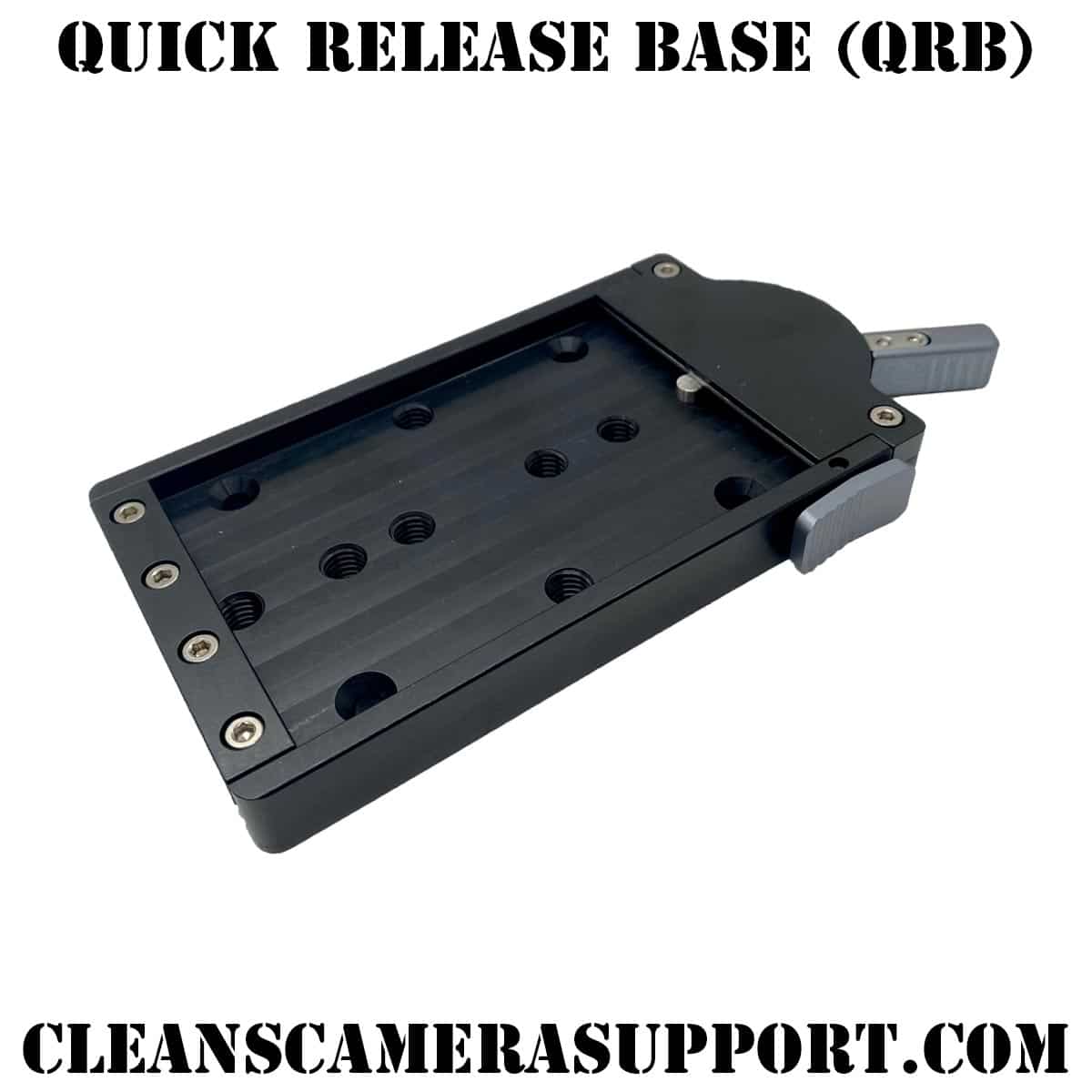
This is the most important accessory on your camera cart. A good QRB lets you dock the camera quickly, securely, and repeatably, without fumbling with screws while the DP is waiting.
The standard in the industry is the Ronford Baker-style quick release base (RBQ). There are a few versions out there, the Otto Nemenz version is the reference, and ours (Clean’s QRB) is machined to the same standard, compatible with O’Connor 120mm euro plates, Sachtler 35 camera plates, and the Arri BP9 bridge plate. Available in 8 anodized colors if you want your cart to look like it belongs to a professional.
You’ll also want a Touch and Go Plate to complete the system, the QRB is the base that stays on the cart, the Touch and Go is the plate that travels with the camera. Together they’re the fastest, most reliable quick-dock system in the business.
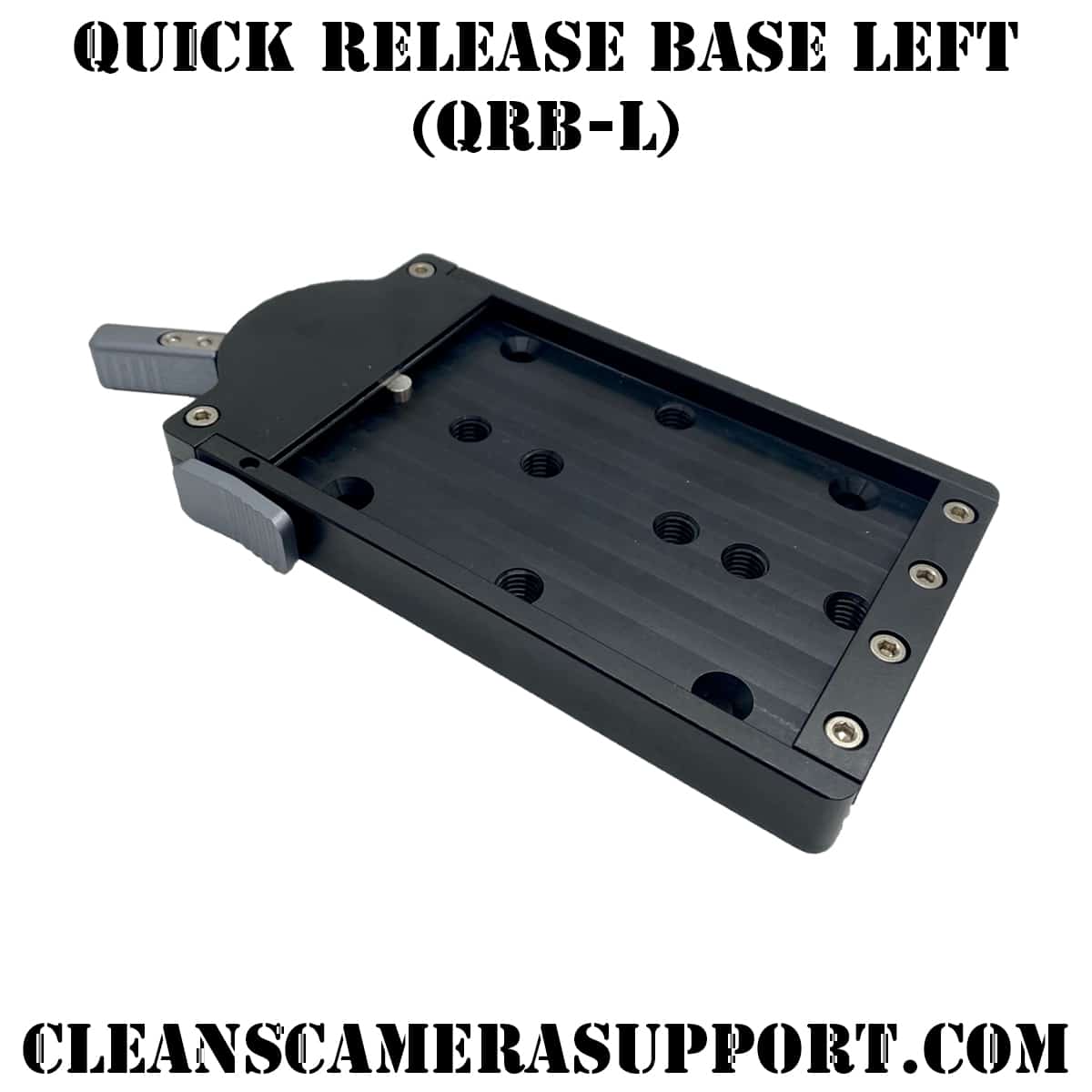
Pro tip: Get the QRB-L (left-hand version) if you run a monitor on the right side of your cart, it keeps your release handle accessible without reaching across your build.
2. Spinner Plate
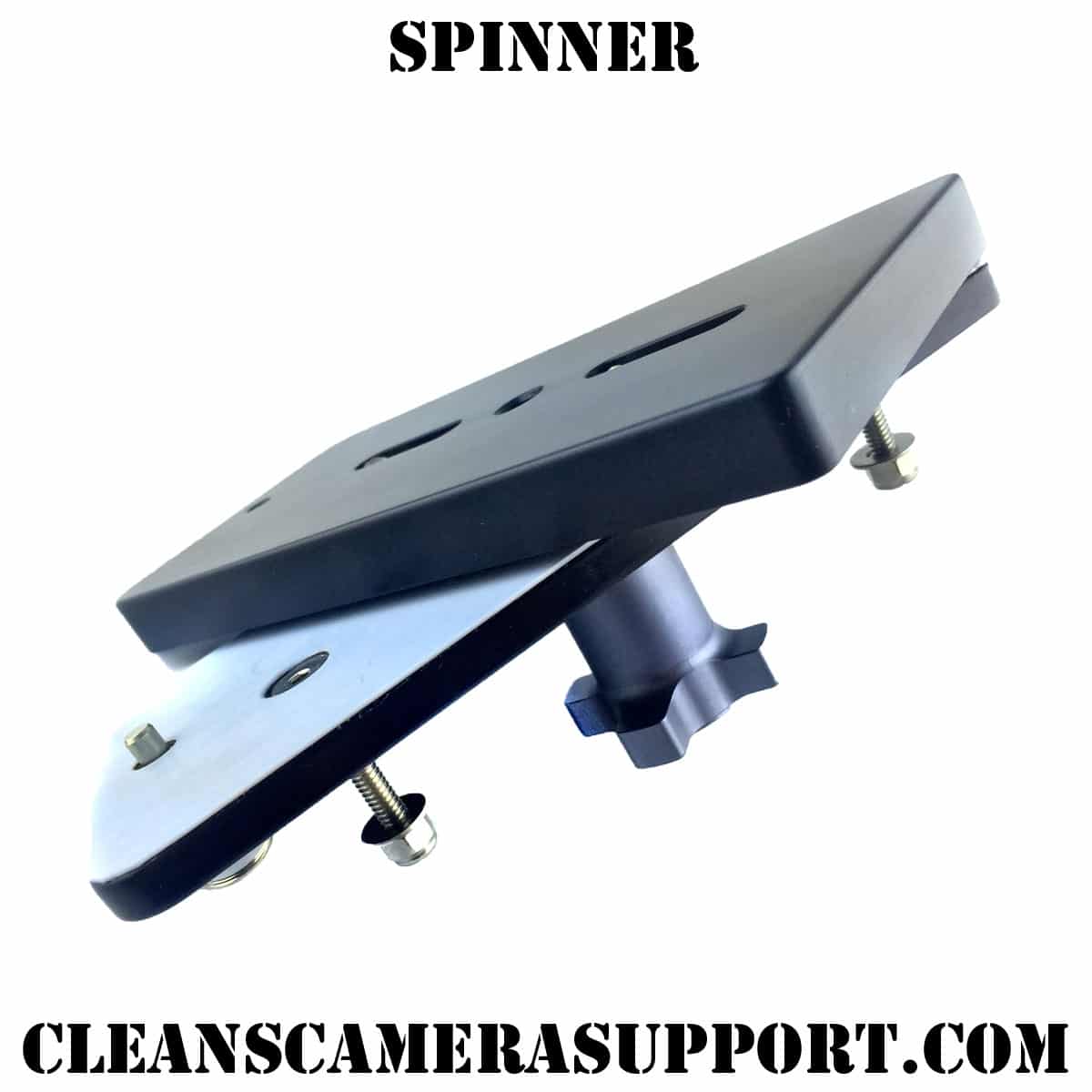
If you’re running any kind of camera that needs to be reoriented on the cart, and you will be, a spinner plate is the difference between a 10-second move and a 2-minute fumble.
A spinner plate sits between your QRB and the camera cart surface and lets you rotate the camera 360° so you can always access the side you need. It sounds like a luxury until you don’t have one and you’re trying to reach a lens release on the wrong side of a docked ALEXA with a director looking over your shoulder.
Our Spinner Plate is machined from 6061-T6 aluminum, stacks directly with the QRB system, and comes in the same 8 color options. Over 54 five-star reviews from working ACs who use it in the field.
3. Cart Hooks
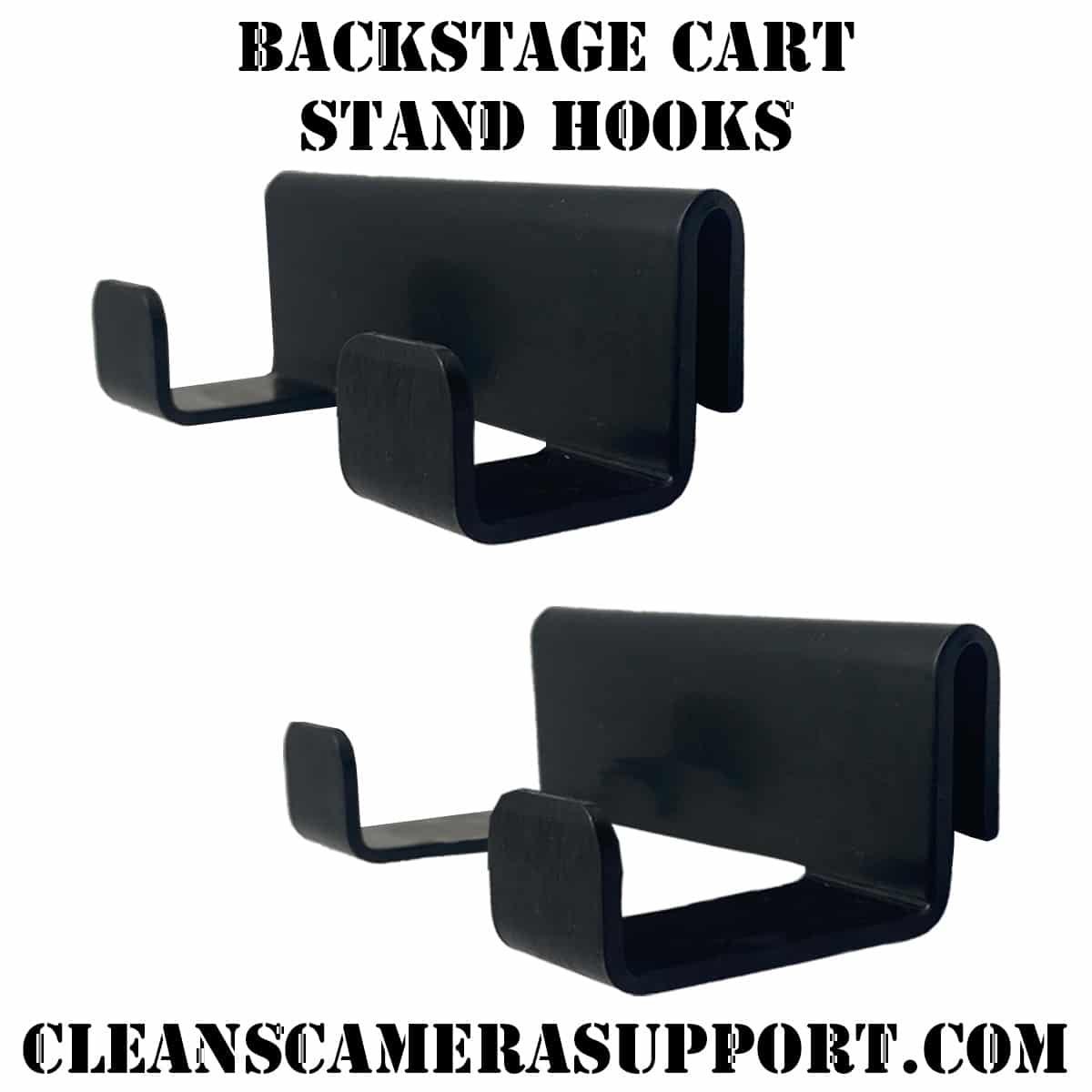
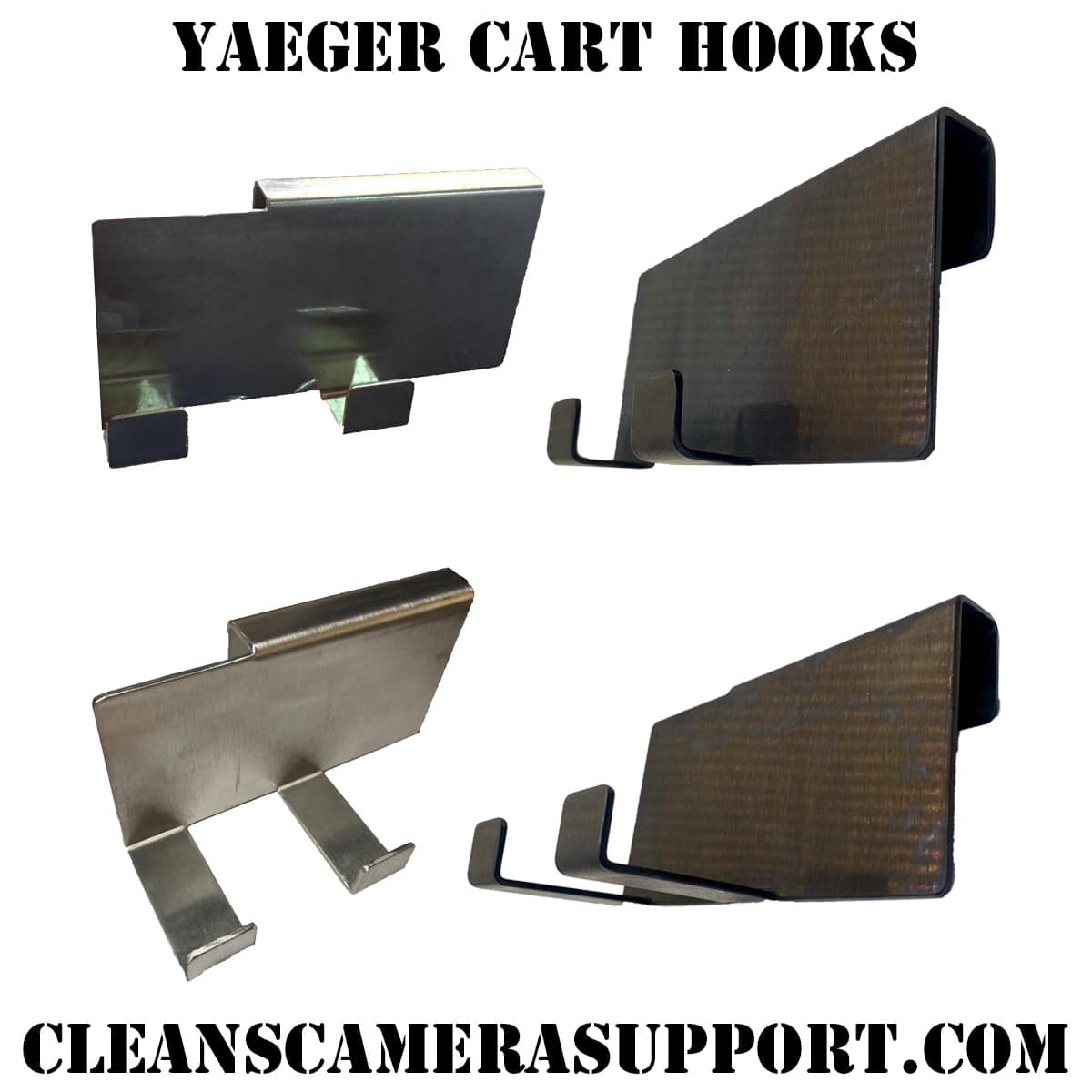
Cart Hooks are what keep your sticks (tripod) attached to the camera cart. They sound boring. They are not boring when yours is the wrong size and your tripod is sliding around on the way to set.
Both the Backstage & Yaeger Cart Hooks we make come in two styles for the different types of stands.
4. A Riser (If You Need the Height)
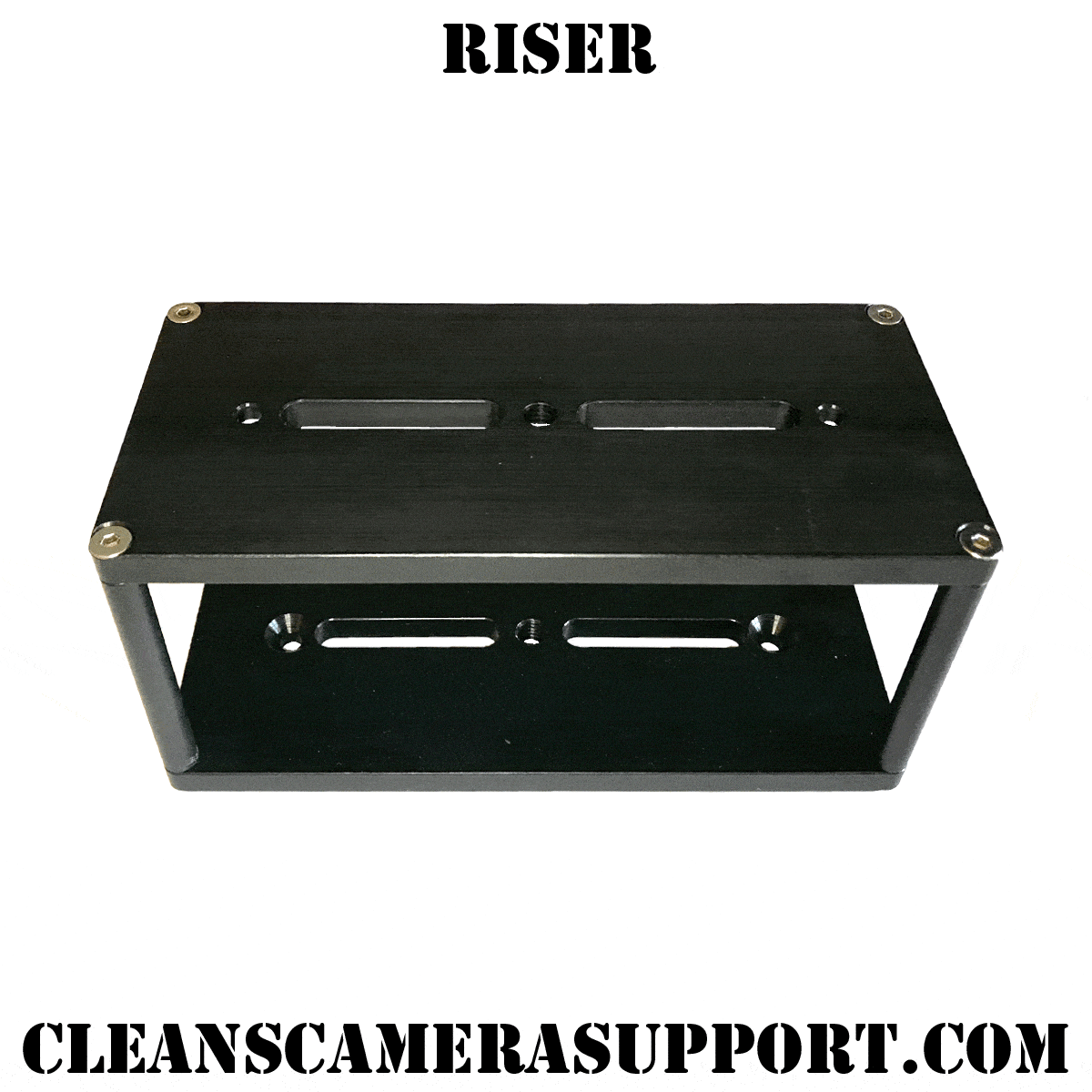
If your camera package is running tall, large lenses, a matte box, a high monitor position, a riser on your camera cart dock gives you the clearance to mount without the camera overhanging the cart edge or touching the shelf below.
Our Riser integrates directly with the QRB system and is machined to the same spec as the rest of the line. Not everyone needs one, but if you do, you’ll know it the first time you try to dock an ALEXA 35 with a 6″ matte box on a low shelf.
Organizing the Rest of the Camera Cart
Once your camera dock is sorted, the rest is about workflow. A few things that make a real difference:
Cart hooks. You’ll hang cables, mags, and accessories constantly. Good hooks, the kind that don’t spin or fall off, matter more than you think. We carry Backstage cart hooks and Yaeger cart hooks depending on your cart brand.
Shelving layout. Top shelf for the camera dock and active build. Middle shelf for mags and lenses in use. Bottom shelf for cases and dead weight. This isn’t a rule, it’s just what works for most setups, adjust for your show.
Cable management. Velcro ties. A lot of them. This isn’t a product we sell but it’s the difference between a cart that looks like a professional runs it and one that looks like a grip bag exploded.
If You’re Running Steadicam Too
If you’re the operator and you’re also managing a camera cart, your needs are a little different, you want a QRB system that works both as a cart dock and as part of your Steadicam rig setup.
The Clean’s QRB works in both contexts. We also carry a full line of Steadicam accessories, including Moses Forks, Moses Poles, and the full JBSteadicam SOS Plate system for operators who want a purpose-built rig solution.
Brand Compatibility: What Works With What
One of the questions I get constantly is compatibility, “does this work with my O’Connor?” “does this work with my BP9?” Here’s the short version:
| Product | Compatible With |
|---|---|
| QRB | O’Connor 120mm euro plate, Sachtler 35, Arri BP9, Otto Nemenz RBQ plates |
| Mini-QRB | Small-format quick release systems |
| Touch and Go Plate | Clean’s QRB and Mini-QRB |
| Spinner Plate | QRB system, standard cart mount |
| Cart Hooks | Backstage & Yaeger |
When in doubt, email us, Clean answers himself and usually within a day
What It Actually Costs to Build a Working Camera Cart
People are always surprised when they add it up. Here’s a realistic number for a functional, professional-grade camera cart setup using Clean’s gear:
| Item | Price |
|---|---|
| QRB (aluminum) | $450 |
| Touch and Go Plate | $115 |
| Spinner Plate (aluminum) | $315 |
| Cart Hooks | $100 |
| Riser (if needed) | $210 |
| Total accessories | ~$1,190 |
That’s on top of the camera cart itself ($500–$2,500 depending on what you buy). There are some links to the more popular carts below. Not cheap, but this is professional gear that should outlast multiple cameras, multiple shows, and multiple decades of your career. Buy it once and buy it right
The Bottom Line
Building a camera cart isn’t complicated, but it does reward intentional decisions. Start with a solid platform, nail your camera dock setup first (QRB + spinner plate + cart pins), then layer in the organization as your workflow develops.
Everything we make is machined from 6061-T6 aluminum in the USA, and every product has been tested on real sets by working professionals. That’s not marketing copy, it’s just how we operate.
If you’ve got questions about what works with your specific setup, hit us up. We’re camera people, not a call center.
Shop the full cart accessories line →
David “Clean” Berryman is a Texas-based 2nd AC with credits across film and television. He founded Clean’s Camera Support to make professional-grade, USA-machined camera accessories available at a price that doesn’t make a camera assistant cry.
camera cart camera cart camera cart camera cart camera cart camera cart camera cart camera cart camera cart camera cart camera cart